ChatGPT Ads are best for targeting users who are doing deep research and comparing options. On the other hand, Google Ads are best for capturing high-intent searches.
A customer who is searching for a product or service on Google would know what they want and may be ready to buy. But if someone is asking ChatGPT, comparing options, or understanding features, they might still be exploring their options. In both scenarios, businesses have a valuable business opportunity to reach their target customers through ChatGPT and Google Ads. Thus, how do ChatGPT Ads vs Google Search Ads differ? Which platform offers better targeting and costs, and which one to choose for your business? By understanding these, you can reach potential customers and maximize your return.
What Are ChatGPT Ads?
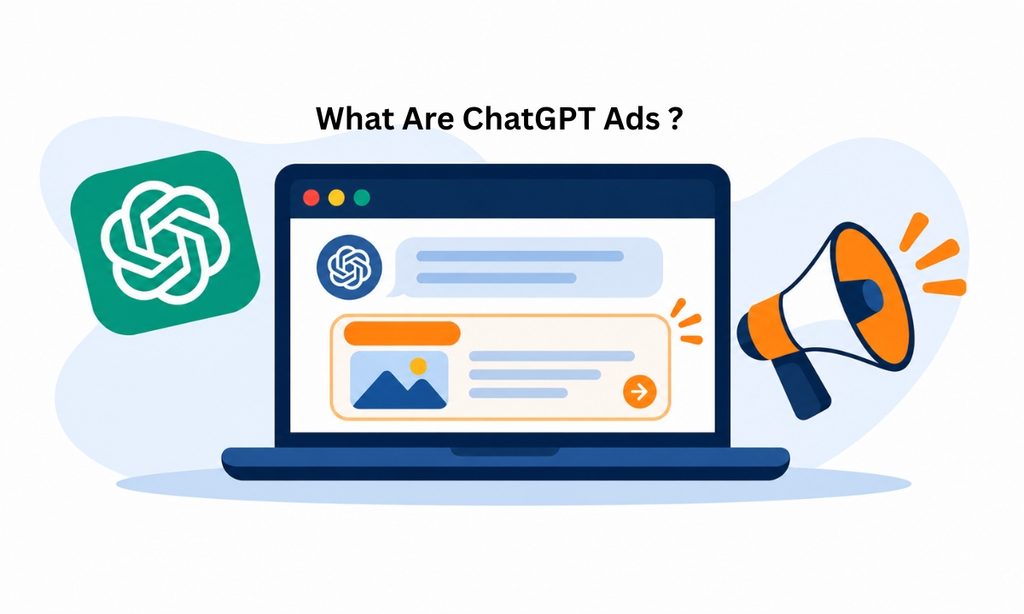
ChatGPT Ads are paid advertisements that appear below the chat interface of the search platform. It is used by brands to promote their products or services and is specially designed to reach users based on the context of conversations, interests, and what they are searching for.
A ChatGPT ad contains:
- Advertiser Name
- Favicon (website icon)
- Title (headline)
- Copy (description)
- Landing Page
- Image Asset (creative)
Moreover, those who see the ChatGPT advertising are only Free and Go users who are adults over the age of 18. The people who do not see ads include paid subscribers, users logged in on Plus, Pro, Business, Enterprise, and Edu accounts.
In addition, advertisers can create, monitor, and optimize their ads on ChatGPT by creating an account on ChatGPT Ads Manager.
Note: Users identified as under 18 are not eligible to see ads on ChatGPT. Also, advertisements are not shown alongside sensitive conversations, such as those involving personal health, mental health, and politics.
What Are Google Search Ads?
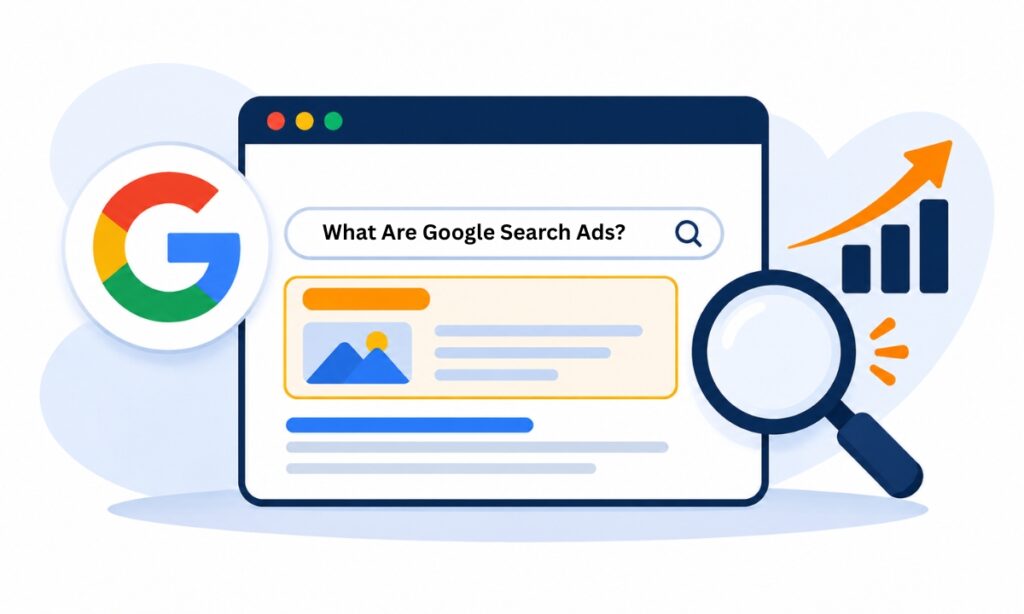
Google Search Ads are text-based paid advertisements that appear at the top of the Google Search Engine Results Page (SERP). Brands use the PPC (Pay-Per-Click) model to run ads and promote their website, products, or services.
For example, if a user searches for “best digital marketing agency,” they may see results with “sponsored” listings just below the Google AI Overview summary and above the organic results.
These ads include details such as:
- Business Name
- Headline (service or offering)
- Description
- Display URL
- Ad Assets (additional links, phone numbers, location information, or promotional details)
Additionally, whether an ad appears and its ranking position depend on its relevance to the user’s search query and other factors. So, when a user searches a query, Google’s system starts checking which ads are relevant to that search and decides which ones to show.
Factors that impact the ads’ eligibility and placement:
- Bid Amount
- Ad and Landing Page Quality
- Search Context
- Auction Competition
- Ad Assets
- Ad Rank Thresholds
ChatGPT Ads vs Google Search Ads: Where They Differ
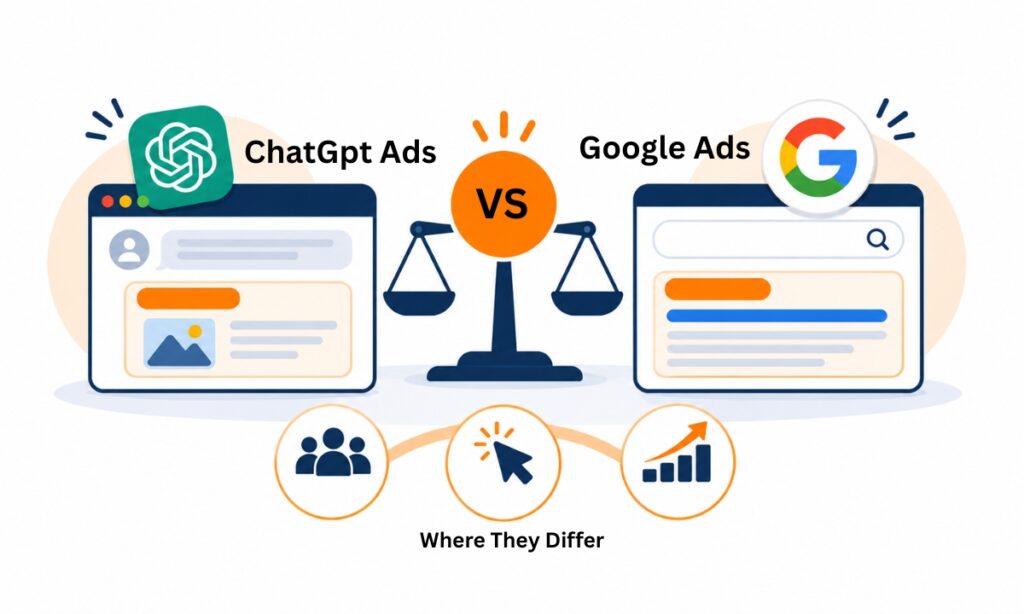
Look at the table below comparing ChatGPT Ads vs Google Search Ads:
| Factor | ChatGPT Ads | Google Search Ads |
| Advertising Approach | Conversation-based, using context and user intent. | Search-based, using relevant search queries. |
| Targeting Method | Uses conversational context and advertiser-provided hints. | Uses keywords, search intent, and campaign settings. |
| Campaign Setup | Uses creatives, context hints, bids, and campaign objectives. | Uses keywords, ad groups, budgets, and bidding strategies. |
| Advertising Cost | Supports impression-based and click-based billing. | Commonly uses cost-per-click (CPC) bidding. |
| Campaign Objectives | Supports reach, traffic, and conversion-focused campaigns. | Supports traffic, leads, sales, and conversions. |
| Performance Tracking | Tracks impressions, clicks, CTR, CPC, CPM, and conversions. | Tracks impressions, clicks, CTR, CPC, and conversions. |
| Best Suited For | Brand discovery and reaching users during research and consideration. | Capturing existing search demand and reaching active searchers. |
ChatGPT Ads vs Google Search Ads: Which Offers Better Targeting?
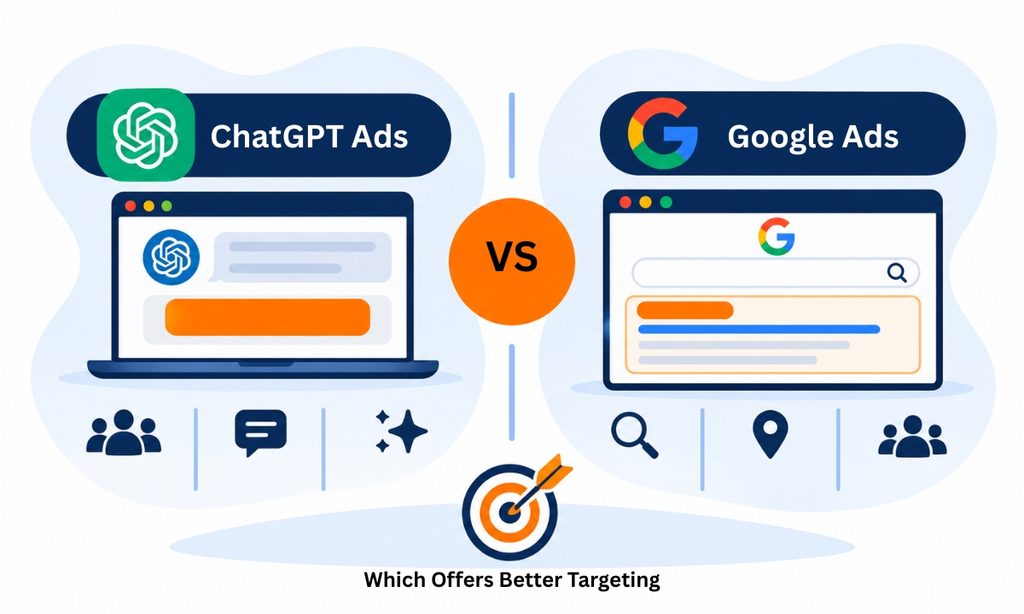
Google Search Ads give businesses more control over who sees their ads. It allows them to target specific keywords, choose locations, age groups, and certain audiences to reach those who are searching for their offerings and ready to make a purchase.
Whereas ChatGPT Ads targeting focuses more on the conversational context. They use prompts and conversations from users as a foundation to understand their needs and show relevant ads while they research and compare options. However, unlike Google Ads, ChatGPT Ads offer less audience targeting control.
Thus, if your business needs immediate sales, Google Ads is a great option, as it can reach people who are already searching to buy your products or services. But if you sell business, industrial, tech, or other types of complex products, or professional services, ChatGPT can help you reach the right audiences.
Cost Comparison: Are ChatGPT Ads Cheaper Than Google Search Ads?
The advertisement costs of ChatGPT Ads and Google Search Ads targeting depend on various factors, including budget, bidding strategy, industry, and competition.
Look at the table to understand Google Search Ads and ChatGPT Ads:
| Cost Factor | ChatGPT Ads | Google Search Ads |
| Pricing Model | CPC and CPM | Primarily CPC for Search campaigns |
| Cost Per Click | OpenAI recommends a starting maximum CPC bid of $3 to $5 | Varies depending on keyword competition and industry |
| Cost Per Impression | Available through CPM bidding | Not the standard Search billing model |
| Budget Control | Advertisers set campaign budgets and bids | Advertisers set daily budgets and bids |
| Competition | Depends on ad relevance and competition for placements | Depends on keyword competition and auction factors |
| Cost Optimization | Optimize for impressions, clicks, or conversions | Use bidding strategies focused on clicks, conversions, or conversion value |
| Performance Tracking | Tracks impressions, clicks, spend, CPC, CPM, and conversions | Offers established click, conversion, and cost reporting |
Advantages and Limitations of ChatGPT Ads
Here are the advantages and limitations of ChatGPT Ads for businesses:
Advantages:
- It reaches people while they are searching for your products or services.
- ChatGPT Ads show ads based on what users search.
- It also helps brands introduce their offerings to a new and wider audience.
Limitations:
- It is a new advertising platform.
- The performance data is less in comparison to Google Ads.
- Ad features and availability may differ by country.
- Campaign performance benchmarks are still developing.
Upsides and Downsides of Google Search Ads
Look at the upsides and downsides of Google Search Ads:
Upsides:
- It reaches people who are actively looking for your products or services.
- Google Ads also offers special tools to manage and track ad campaigns.
- It lets businesses target specific keywords for specific locations.
Downsides:
- Keywords that are competitive can cost more.
- Ad campaigns need regular keyword and bid adjustments.
- The reach of your ad depends on how many people are searching.
How to Choose the Right Advertising Platform for Your Business
Whether you should choose ChatGPT Ads or Google Search Ads, the decision depends on specific business goals, target audience, and advertising budget. Thus, before you invest in any of the platforms, make sure you:
1. Define Your Business Goals
Define what your business objectives are, whether to show ads to people who are researching and comparing options or want to generate immediate leads, website visits, or sales.
2. Know Your Target Audience
To understand where to advertise, first look at your audience’s interests, needs, and buying habits. Consider what kind of query or question they ask when they look for products or services you offer.
3. Consider Advertising Budget
Then, consider comparing the minimum budget requirements, bidding options, and campaign costs of both platforms. Also, start with an affordable rate and continuously monitor the results generated over time, then increase based on your further needs.
4. Track and Compare Campaign Performance
Track your ad performance on both platforms based on cost per lead, customer acquisition cost, and return on ad spend (ROAS). Then, compare the results that both platforms offer to understand which one brings more value to your business.
Conclusion
ChatGPT Ads and Google Ads are both advertising platforms that offer different ways to reach potential customers. ChatGPT allows you to advertise to people who are researching your offerings; on the other hand, Google Search Ads offers a way to show ads to those who may be ready to buy. By understanding the comparison of Google Ads vs ChatGPT Ads, how they work, differences, and advantages and limitations, you can choose a platform that suits your advertising and business needs.
If you want to advertise your business with ChatGPT Ads and Google Search Ads, you can reach out to Web Glaze Services. We are a well-known IT and digital marketing agency that offers services for paid advertising on ChatGPT and Google Ads. Our services include Pay-Per-Click (PPC), social media ad campaigns, campaign management, and more. Our team takes a data-driven approach along with timely reporting on a monthly basis. Thus, connect with us today and get your customized ad solutions for your business.
Frequently Asked Questions:
Can ChatGPT Ads for businesses improve brand awareness?
Yes, ChatGPT Ads for businesses can improve brand awareness.
Do ChatGPT Ads affect the answers generated by ChatGPT?
No, ChatGPT Ads do not affect the answers generated by ChatGPT.
Can you use ChatGPT ads and Google Search ads together?
Yes, you can use ChatGPT Ads and Google Search Ads together.
Are ChatGPT Ads suitable for small businesses?
Yes, ChatGPT Ads for small businesses are a suitable option for building brand awareness, reaching potential customers, and promoting your products or services to users searching for different solutions.
What is the cost of Google Search Ads campaigns?
The cost of Google Search Ads campaigns in India has no fixed rate, as pricing is based on actions, where you pay on a Pay-Per-Click (PPC) model.

