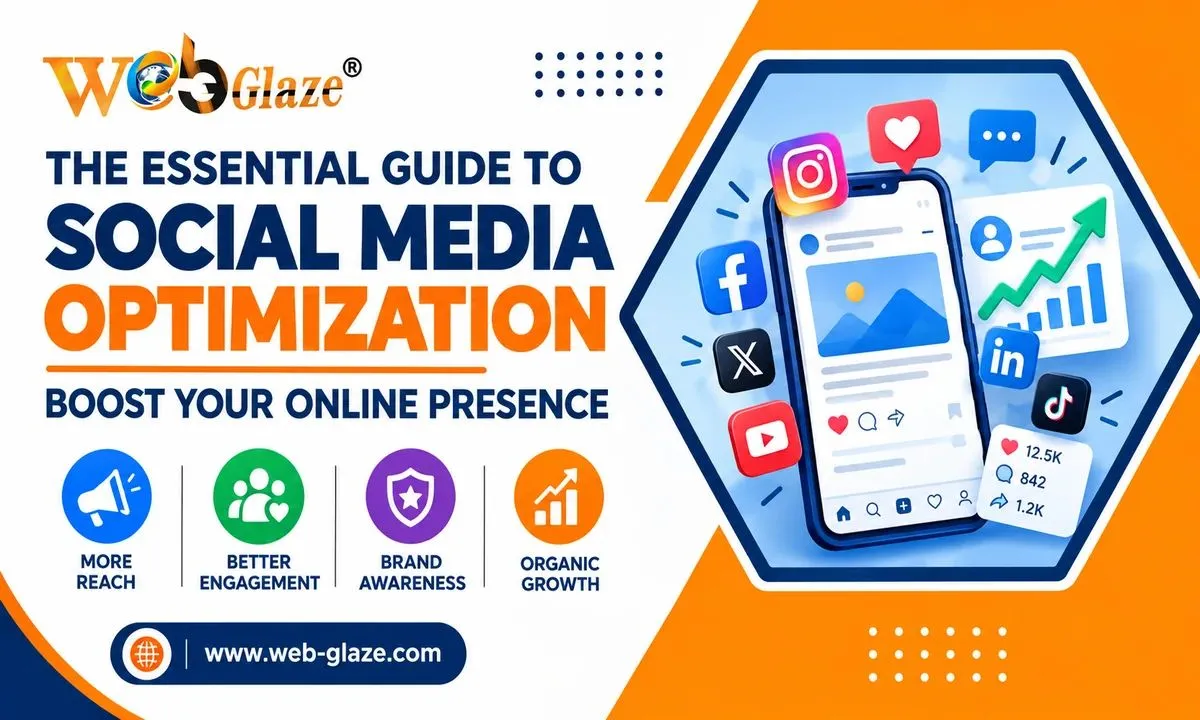
SMO is a process of refining your social media content, profiles, and audiences to increase online visibility, user engagement, and referral traffic. The main strategies are targeting relevant keywords, consistent branding, and building a trusted network across multiple social media platforms.
Grabbing people’s attention on social media is one thing, and giving them a reason to remember your brand is another. In Social Media Optimization (SMO), you can bridge this gap by optimizing your social media profiles, presenting a clear brand identity, sharing relevant content, and engaging the right audience. Thus, with the right approach, you can build a strong brand identity online and create long-term connections with your target audiences.
What Is Social Media Optimization (SMO)?

Social Media Optimization (SMO) is the practice of optimizing your profile for social media platforms to increase online visibility, build a strong network of an audience, and increase brand awareness. In this process, marketing focuses on driving organic traffic across multiple social platforms, rather than depending on paid social media campaigns.
- Profile Optimization: Optimizing social media profiles using your business name, logo, a clear description, and a relevant link that takes users directly to your website.
- Native Formats: Creating and posting content that is relevant to the specific social media platform’s algorithm.
- Consistent Content Rhythm: Maintaining a consistent posting schedule across social media platforms, reflecting authenticity.
- Audience Engagement: Focusing on audience interactions such as shares, saves, comments, and direct messages, instead of likes and follower count.

Have a question? Send us your enquiry.

Speak directly with our expert team.

Connect with us for instant assistance.
How Social Media Optimization Supports Business Growth?

Social Media Optimization (SMO) supports your business growth by making it visible to its targeted audience. A business may have been posting every day and might still struggle to grow if its content does not reach people who are most likely to engage and buy.
SMO, here, helps the business reach the right audience by aligning the content with users’ behavior, which helps them bring in more customers and achieve long-term growth.
- Brand Recognition and Visibility: SMO makes your business recognizable online among the target audience. It involves refining social media profiles, publishing content consistently, and actively engaging with your audience. By using a clear description, logo, and keywords, it helps you build a recognizable identity online.
- Help Increase Organic Traffic: By posting relevant, shareable content, such as videos, infographics, and engaging updates, you can increase organic traffic to your business profile. Additionally, by placing relevant links to the website, products, launches, and updates, it brings high-intent customers as well.
- Customer Trust and Authority: When a business consistently publishes valuable content, insights, and customer testimonials on its social handles, it showcases its customers that it is a trusted source in the specific niche. This establishes a sense of trustworthy authority among your customers.
- Increases Audience Engagement: SMO increases audience engagement by creating relevant and engaging content that matches users’ interests and preferences. Through posting interactive content, regular updates, and responding, businesses increase likes, comments, shares, and conversations.
How to Build an SMO Strategy Around Your Business Goals

Building an SMO strategy is more than posting regularly; it centers around creating an effective framework to optimize your social media profiles and content that supports your business objectives.
Here is how you can build a sustainable SMO strategy for your business:
1. Define Your Business Goals
The first step in building an SMO strategy is determining your business goals. For instance, if your objective is to generate leads, then your strategy should focus on creating educational posts, customer success stories, providing useful resources, along with clear calls to action.
- Brand Awareness
- Website Traffic
- Customer Engagement
- Sales Growth
- Customer Retention
2. Identify Your Target Audience
Then comes the next step: identifying who your target audiences are, their behavior, and preferences across different social media platforms. Look for the following things:
- Demographics, interests, and specific location.
- Customer needs, challenges, and their purchasing behavior.
- Preferred social media platforms.
- Questions your target customers frequently ask.
- Content formats they prefer and engage with most.
3. Choose the Right Social Media Platforms
Selecting the right social media platform is important, as each attracts a different type of audience. For example, LinkedIn is generally used by working professionals, business owners, managers, HR recruiters, and others. On the other hand, Instagram has a totally different kind of audience; it targets younger customers and is mostly used for entertainment.
| Platform | Target Audience | Best For | Content | Business Goal |
| Adults and local communities | Community building | Images, videos, events | Brand awareness | |
| Young adults and lifestyle audiences | Visual branding | Reels, Stories, carousels | Engagement and sales | |
| Professionals and businesses | B2B marketing | Case studies, industry insights | Lead generation | |
| YouTube | Video viewers and learners | Video marketing | Tutorials, demos, Shorts | Brand awareness |
| X (Twitter) | News followers and professionals | Real-time updates | Short posts, threads, polls | Brand visibility |
| Inspiration seekers and shoppers | Visual discovery | Pins, infographics, guides | Website traffic | |
| TikTok | Younger audiences | Short-form videos | Trends, demos, creative videos | Audience growth |
| Customers and local consumers | Direct communication | Updates, catalogs, messages | Customer retention |
4. Create a Strategy Aligned with Goals
Creating an SMO strategy that matches your business objectives is important to ensure that the content you are publishing can generate measurable results. It is necessary for:
- A clear direction of content creation.
- Allocating resources smartly to get measurable ROI.
- Avoiding wasting time on creating irrelevant content.
Here is a table of how different content types serve different purposes:
| Content Type | Purpose | Example |
| Educational | Build authority | Tips, tutorials, industry insights |
| Engaging | Encourage interaction | Polls, questions, quizzes |
| Promotional | Generate leads or sales | Product highlights, service offers |
| Trust-Building | Establish credibility | Testimonials, case studies |
| Brand-Focused | Improve recognition | Behind-the-scenes posts, team stories |
5. Optimize Your Social Media Profiles
Optimize your business’s social media profile while ensuring it is clear, professional, and conveys what it is about. Also, add calls to action and your website’s links to it, so potential customers can visit and make purchasing decisions.
- Business name and logo
- Clear business description and target audience
- Relevant profile keywords
- Accurate contact and business details
- Relevant website or landing page link
- Clear calls to action (CTAs)
- Highlighted posts with customer reviews or success stories
6. Make a Consistent Posting and Engagement Plan
By building a consistent posting and engagement plan across social media platforms, businesses can create a recognizable brand identity through repeated exposure among their target audiences. Apart from this, it also satisfies the platform’s algorithm, which favors profiles that stay active and post on a regular basis.
In addition to that, you should keep your focus on creating a realistic publishing schedule that does not overwhelm your audiences and keeps them engaged. With this, answering their questions and engaging in small conversations with your audiences can also help you build a web of loyal customers.
7. Measure Your Performance and SMO Results
Measuring your SMO performance is important to make sure that your resources are being spent on strategies that are actually useful for your business. The data you get from SMO results also helps you understand audience demographics, preferences, and behaviors in depth, which acts as a foundation for creating stronger SMO strategies for future growth.
KPIs that measure your SMO performance:
| KPI | Purpose |
| Reach | Number of unique users who see your content |
| Impressions | How many times your content is displayed |
| Engagement Rate | Measures likes, comments, shares, and other interactions |
| Click-Through Rate (CTR) | Shows how many users click on your links |
| Conversion Rate | Measures how many users complete a specific action |
| Follower Growth | Tracks how many followers increased or decreased |
| Leads Generated | Measures how many customers came from social media |
What Are the Best Social Media Content Optimization Techniques?

Content optimization techniques increase social media engagement by making it more visually appealing, easier to discover for audiences, and especially directly targeted to their intent.
Here are some of the techniques you can use:
- Use High-Quality Visuals: Create high-quality posts, videos, and carousels.
- Write Engaging Captions: Write direct and clear captions, relevant to the specific topics.
- Use Keywords and Hashtags: Use keywords and hashtags in your posts and videos.
- Post at Suitable Times: Publish social posts at suitable times, as per different social media platforms.
Engage With Your Audience: Engage with your audience, reply to their comments and questions.
How SMO and SEO Work Together to Improve Online Visibility?

Social Media Optimization (SMO) and Search Engine Optimization (SEO) are two main methods in digital marketing that you can use to build your business’s presence online. SMO helps your business reach out to its target audience through Instagram, Facebook, and others. On the other hand, SEO helps increase its search engine rankings on Google and other platforms.
For example, a gym optimizes its website using SEO and also shares its photos and customer experiences, insights, and other valuable information on its social media handles. Here, it is using both SEO and SMO, sharing content on websites and also promoting it on Instagram and other platforms. By using both strategies, it allows people to discover it, increases traffic, and attracts potential customers as well.
What Are the Common Social Media Optimization Mistakes to Avoid?
Here are some of the common mistakes that businesses make in Social Media Optimization in digital marketing:
- Posting Without Strategy: Publishing posts, videos, and other forms of content without a defined strategy and objective of what your business wants to achieve.
- Using the Same Content Everywhere: Using the same visuals, content, and descriptions on each social media platform does not work. Every platform has different formats, audience expectations, and tone, which brands should follow.
- Over Promotion: Promoting your products or services in every single post and video on any social media handle results in lost users’ interest. Thus, balance your content with informational and entertainment content as well.
- Ignoring Audience Interaction: In 2026, brands that are not interacting with their audiences might be losing customers and business opportunities. So, reply to the questions, direct messages, and interact with your audiences through posts and stories.
- Not Considering Negative Feedback: Businesses should not ignore negative feedback or delete them through their social media handles. Instead, what they should do is resolve those conflicts with complete transparency, as many of them can be genuine.
- Clinging to Vanity Metrics: Do not stick to the follower count; instead, consider metrics such as click-through rates, lead generation, and actual user engagement, such as comments and direct messages.
- Ignoring Analytics: Businesses should not ignore performance analytics on a monthly or quarterly basis. It helps them understand whether their strategy is working, what areas to improve, and create new ones for more sustainable online growth.
When Should a Business Consider a Professional SMO Agency?
You should consider professional SMO services in India if:
- You are struggling with low engagement and want to create content that encourages user interaction.
- You have no content plan or a dedicated, in-house team to develop an SMO strategy.
- You want your business to be discovered by more customers.
- You do not have time or skills to manage your social media professionally.
- You are struggling to get high-quality leads.
- You are expanding your business and want to reach new audiences and markets.
How to Choose the Best SMO Services Company in India
To choose the best SMO services company in India, be sure of the following pointers:
- Define Your Objectives: First, define whether you want dedicated SMO services or want mixed packages of SMO/SEO or SMO/SMM.
- Confirm Platforms: Ensure the specific SMO agency you choose to work with provides expertise for the specific platforms that you want to target.
- Evaluate Industry Experience: Confirm that the SMO services company in India has relevant understanding, market knowledge, and experience in the specific industry that you are operating in, such as e-commerce, education, SaaS, or B2B.
- Assess Track Record: Look for their past work, case studies, and client testimonials to assess their track record, how they work, deliver results, and whether they meet your expectations.
- Check Creative Capabilities: Make sure that they have dedicated content writers, copywriters, graphic designers, and video editors who can create content that your business needs.
- Clear Reporting: Ensure that the SMO services you choose provide monthly reporting for user engagement rates, reach, traffic, and lead generation.
- Transparent Packages: Ask for packages that clearly mention the services included along with their prices. Also ask for the exclusions beforehand to avoid any inconveniences later.
Conclusion
Social Media Optimization (SMO) is a process through which businesses can increase their online visibility, build a recognizable brand identity, and reach potential customers in their specific niche. With the help of content that is created to target relevant audiences, optimizing social profiles according to each platform, and tracking performance, you can grow your business online and increase its online presence as well.
If you want to build an online presence for your business, you can reach out to Web Glaze Services. As a reputable digital marketing agency in India, we have been helping businesses reach a wider audience through SMO strategies for more than 10 years. Our team consists of professional writers, designers, and video editors who understand your business needs and create content accordingly. Thus, connect with us, discuss your business requirements, and get customized SMO services today.
Frequently Asked Questions About SMO
1. How often should a business post on social media?
For most of the businesses, posting consistently is recommended at 3 to 5 times per week, but the actual frequency may depend on specific business type and platform.
2. Can I do social media optimization myself without hiring an agency?
Yes, you can do social media optimization yourself for your business if you have basic skills and time, but for long-term goals, considering professional help is recommended.
3. How long does it take to see results from SMO?
It typically takes months for measurable results to show up, which also depends on your business, industry competition, content quality, consistency, and other factors.
4. Is SMO useful for small businesses with a limited budget?
Yes, SMO is useful for those small businesses as well that have a limited budget.
5. Does social media optimization help local businesses attract nearby customers?
Yes, social media optimization helps local businesses attract nearby customers.

