

Many websites fail to secure a high rank in search results even with good content. In case this is happening with you also, you need to understand that the issue is not content but weak SEO page titles. Search engines and users depend on titles to decide whether to click on a page or not. With an unclear title, your page can lose both visibility and clicks.
Page meta titles help search engines understand the topic of a page during indexing and ranking. They tell what a page is about, highlight keyword focus, and also signal content intent. With strong titles, you can easily improve your page’s search performance. A title with clear wording also improves CTR, as users know what the page they’re visiting will offer. Keep reading to understand more about SEO page titles and how to write them so they can help you attract clicks and better rank.
Table of Contents
What are SEO Page Titles?
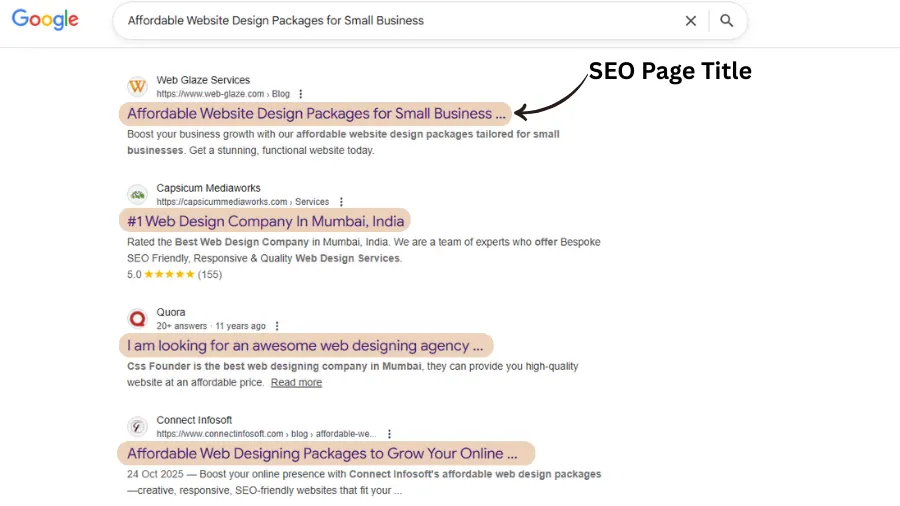
SEO page titles or title tags are HTML elements in the head section of a web page. These appear as blue clickable headlines in search engine results and browser tabs. They concisely describe the page content and help both users and search engines. In simple words, they act as the first impression to attract clicks and signal relevance with the searched query.
Page meta titles must include the primary or focus keyword. The title must be clear and under around 70 characters. Google uses these most of the time (around 87%) rather than generating its own title from other text in your H1, body text, or link text. Search engines use these tags to decide whether the page matches a search query and to attract visitors.
Importance of SEO Page Titles
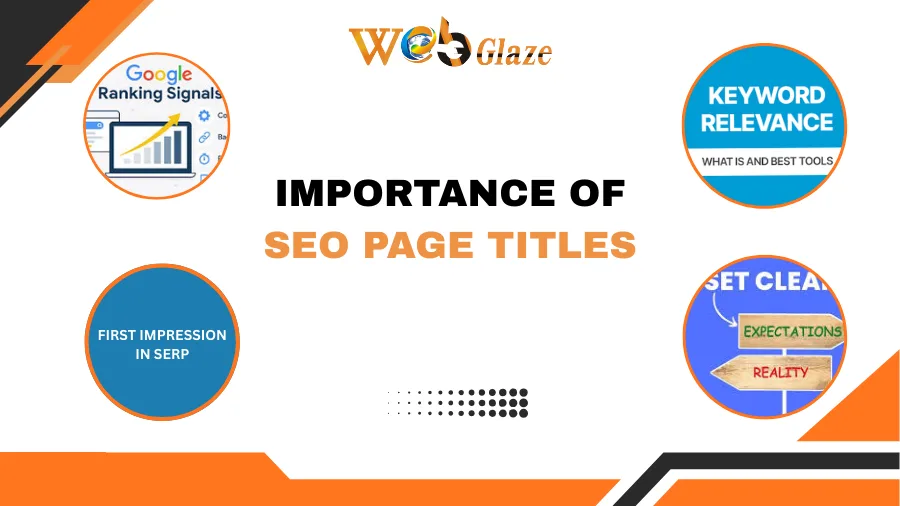
Website owners must understand that strong page titles are a must for their website’s success, as they greatly influence SEO rankings. You can consider a good SEO title as a compelling book cover for your web page that targets searchers (new users on your site). The following points will help you better understand how a clear page meta title is important for user experience and search engine visibility:
- Ranking Signal: You can think of page titles as the most important on-page SEO factor. They are among the first things a search engine crawler reviews to understand the main topic or relevance of content on a page.
- Keyword Relevance: SEO experts add relevant keywords in the page meta titles to help search engines match your page to user search queries. So, a clear title greatly helps search engines during indexing and ranking.
- First Impression: You now understand that a page title appears as the main clickable headline in SERPs. So, when your title is clear and compelling, it can convince users to click on your page link over competitors.
- Sets Expectations: With a good title, you can tell users what information they will find on your page. This reduces the bounce rate issues that lower website ranking, as users don’t quickly leave the page.
How to Write SEO Page Titles: Best Practices
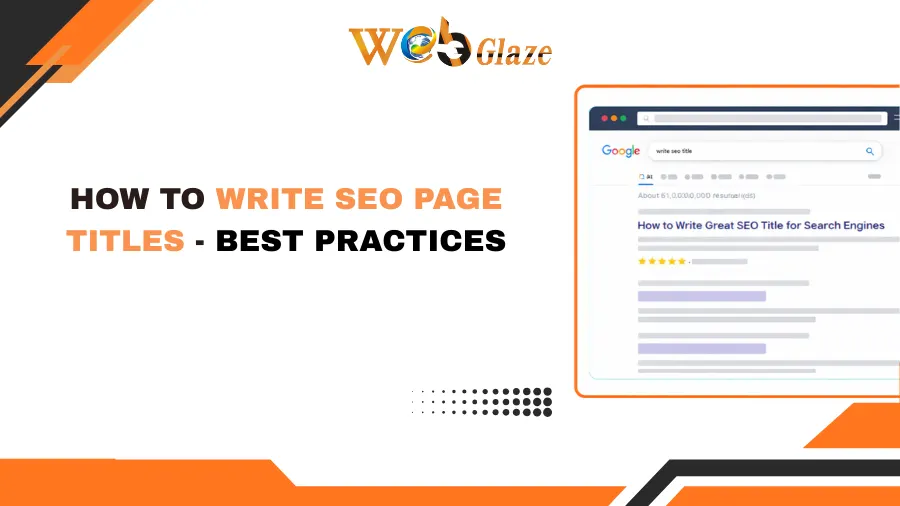
While page meta titles are not the only factor, with a strong and keyword-rich title, you can secure a higher page ranking. You should include your brand name in the page title to build a trusted image. You must understand that a clear page title closes the gap between what users search for and the content you offer, so it is important for SEO success. Here are some practices that you must follow to write titles that rank:
1. Right Keyword Placement
You must put your most important keyword, which SEO experts consider the focus or primary keyword, at the very beginning of the title. This is because search engines give more weight to words at the start of the page meta titles. Users also scan from right to left, so right keyword placement can help with higher relevance.
2. Keep Title Length SEO-Friendly
When writing page meta titles, you must make sure they have 50 to 60 characters or ~600 pixels to prevent Google from cutting them off in SERPs. Google truncates the title based on a 600-width limit. Truncation makes a title look incomplete and less professional, and users are less likely to click on a title that gets cut off. Any important keyword or brand name at the end of a long title is hidden by ellipsis, which reduces the page title’s effectiveness.
3. Match Titles with Search Intent
Another best practice that you must follow when writing SEO page titles for your webpages is matching them with search intent. This simply means you must understand why users are searching or what they are looking for. You can use words like how to for informational intent and buy or get for transactional intent.
4. Research Keywords Before Writing Titles
You should research keywords before writing page titles by using tools like Google Keyword Planner. You can use these tools to find high-volume and low-competition keywords. By identifying the target keyword and other terms that users actually search for, you can easily write a keyword that secures a good rank.
5. Write Unique Titles for Every Page
Not all pages on a website can tell about the same topic, so every page needs a unique title. You must make sure every page on your site has a unique title, and you must prevent keyword cannibalization. When different pages on a site target the same keyword, it confuses Google and makes it difficult to rank them for search results. So, you should write page meta titles that actually describe the page concept.
6. Avoid Keyword Stuffing
You must not overuse keywords in page meta titles, as it can lower your CTR. Overusing simply means you should repeat keywords in the page title. For example, when writing a blog on a similar topic we’re discussing, you must not use a title like What are SEO Page Titles: How to Write SEO Page Titles. For example, instead of using a keyword-stuffed title like “SEO Services in Chandigarh: Best SEO Services in Chandigarh,” use a more natural and compelling title such as “SEO Services in Chandigarh: Proven Strategies for Better Rankings.”
7. Use Power Words and Numbers
When writing page titles, you should include power words, like ultimate, best, secret, proven, and others, as these trigger curiosity. You must add numbers in the title, like for a similar blog on the SEO page title, you can use a title like SEO Page Title: 7 Best Practices to Write It. Numbers are more scannable than text and attract clicks and show relevance. You can also use timely references, like for 2026, or extra context like (full guide).
8. Use Title Case for Better Readability
The simplest trick to attract more links and show high relevance is to capitalize all major words in the page titles. As we have done here, How to Write Titles That Rank. You must avoid all caps, as that looks less professional. Capitalizing the first letter of every major word in the title improves its readability.
9. Add Brand Name and Smart Separators
When writing meta page titles, you must add the brand name at the end of the title. However, you must make sure it is included with smart separators, like a | or -, which will help you build brand recognition. By using smart separators, you can keep your title’s appearance clean and make it more readable.
10. Test and Improve Titles Using SEO Tools
Before you publish, you should check your title’s appearance using smart SEO tools. This will help you understand whether the title will clearly convey what the page is about or not. You should use GSC and other tools to track which titles have a low CTR. After reviewing performance monitoring reports, you can update the titles with low CTA and secure better performance.
Completing Your SEO Strategy With Web Glaze Services
Writing strong page titles is an important part of creating a strong SEO plan and can help you achieve consistent results. However, this needs expert planning, testing, monitoring, and regular updates. You might struggle to manage all this without expert support, and common mistakes like overusing keywords and wrong keyword placement can badly affect your page ranking.
With Web Glaze Services, you can secure support from a team that understands how search engines work today. We can help you write compelling and strong page titles that match keyword intent and other requirements. Our team of SEO experts, experienced content writers, and other team members helps businesses build stronger search presence and user trust.
Also Read : What Are Canonical URLs? Easy Guide for SEO Beginners

