Generative Engine Optimization (GEO) is a strategic practice of optimizing content so that AI search engines such as ChatGPT, Gemini, Perplexity, and others can easily discover, summarize, and cite it in results. GEO focuses on making your content synthesis-ready for AI, while SEO depends on blue links.
Traditional search has fundamentally changed in the present world. Users are shifting from scrolling through Search Engine Results Pages (SERPs) to getting direct and personalized answers from AI search engines. This shift has given rise to Generative Engine Optimization, a practice where you focus on crafting content that can easily appear in the AI search results, helping your brand or business reach audiences and build trust and credibility.
What is Generative Engine Optimization (GEO)?
Generative Engine Optimization (GEO) is a process of optimizing the content of your website in a strategic way so that it can be easily processed and summarized by AI search engines.
These AI search engines and Large Language Models (LLMs) prioritize content that is structured, clear, and factual. If your content meets these requirements, then its possibility of being cited in any of these AI search engines increases.
Furthermore, in 2026, when users actively search for their queries on AI search engines, relying solely on Search Engine Optimization (SEO) can push your content aside, even if it is high quality.
How are GEO and SEO Different?
GEO and SEO are both digital strategies that help businesses build strong and reliable online visibility. Search Engine Optimization (SEO) focuses on ranking content on the Search Engine Results Pages (SERPs) by depending on keywords and other strategies.
However, in the case of Generative Engine Optimization (GEO), the process also emphasizes visibility, but in a different way: optimizing content for AI search engines for citation.
Here are the key differences between GEO and SEO:
| Aspect | SEO (Search Engine Optimization) | GEO (Generative Engine Optimization) |
| Goal | Rank higher in search engine results | Get cited or referenced by AI-generated answers |
| Focus | Keywords, backlinks, technical SEO | Context, authority, and AI-readable content |
| Platform | Search engines like Google and Bing | AI tools like ChatGPT and Google Gemini |
| Success Metric | Website traffic and rankings | Mentions, citations, and visibility in AI responses |
| Content Style | Keyword-optimized content | Clear, factual, and well-structured content |
| User Journey | User clicks a search result | User gets an answer directly from AI |
| Optimization Method | On-page SEO, links, technical fixes | Entity authority, trusted sources, structured information |
| Outcome | More website visits | More brand visibility and AI citations |
Why is Generative Engine Optimization Important in 2026?
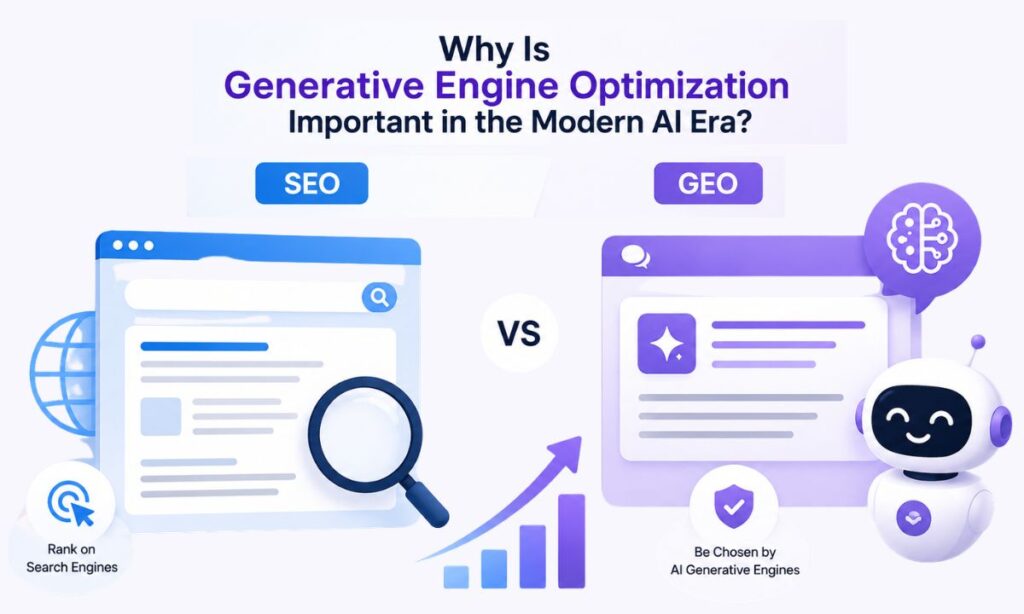
Generative Engine Optimization has become important in 2026 because of the shift of millions of users from traditional search to AI-based search. In other words, millions of users worldwide are trusting AI and Large Language Learning Models (LLMs) to conduct research and find answers and queries.
Therefore, optimizing content that fulfills the AI search requirements can help your website be easily cited in various AI search engines.
The major reasons why Generative Engine Optimization (GEO) is essential for businesses in 2026:
1. The Rise of “Zero-Click” Search
In 2026, users can get answers, compare products, and get any address without actually clicking the website ranking on the SERPs. They can just search their query and get their desired response.
According to DESIGNRUSH, as of 2025, Google’s AI Overview has reached 2 billion monthly users, covering about 25% of the world population. This reflects the rise of dependence on AI-driven results, which significantly reduces traditional organic click-through rates (CTR) by 34% to 61%.
2. All Information in One Place
AI search engines can gather all information regarding the user’s query in a single chat box, reducing the need to find it. As per Elfsight, users globally spend an average of 5 minutes of 50 seconds on ChatGPT conversing about their queries.
3. Builds Brand Trust and Saves Time
Users worldwide usually prefer AI search results to compare and get recommendations before making purchases. Because every brand claims to be the best, it breeds widespread skepticism, making it difficult for users to trust the authentic ones.
However, AI search results act like a digital agent, helping them compare products and services based on their needs. It recommends products in seconds with high personalization, saving users from scrolling through SERPs to find the best-suited one.
4. Shift to AI Search Platforms
The shift of millions of users to AI search platforms has also made GEO very significant in your digital marketing strategy.
- ChatGPT: According to BabyLoveGrowthai, around 900 million users actively engage with ChatGPT every week.
- Perplexity AI: Another statistic mentioned by fatjoe suggests that Perplexity AI answers over 100 million users on a monthly basis, showing a revolutionary shift.
- Google: Over 1 billion users globally utilize Google’s AI Mode and Search monthly, as per taylorscherseo.
Also Read: How to Get Your Brand Mentioned in ChatGPT, Perplexity & AI Search Results
How to Optimize Content for AI Generative Search?
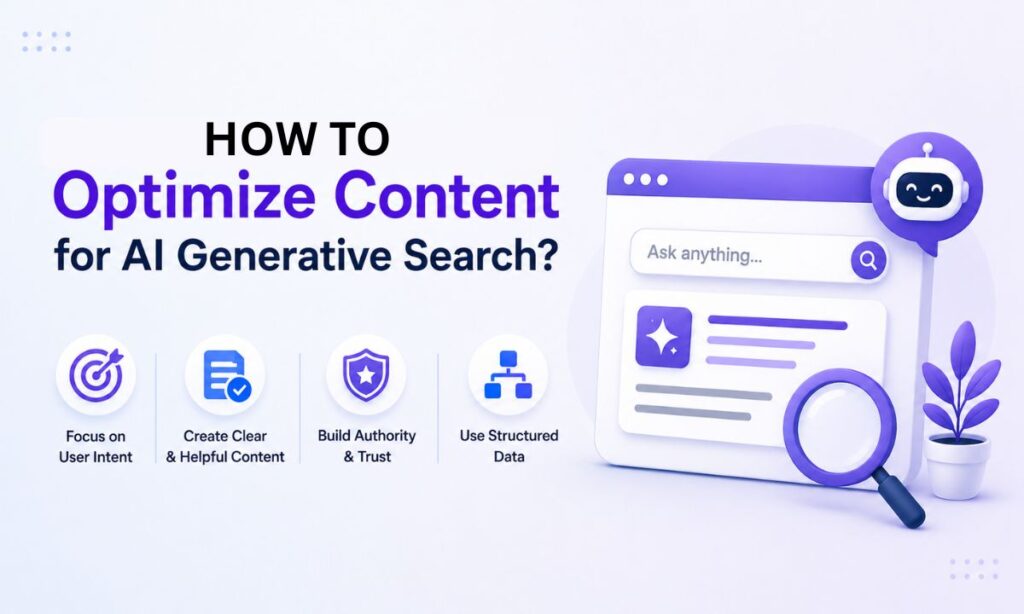
Optimizing content for Generative AI search so it can be cited in the results of AI search engines requires simple but critical steps. Google For Developers emphasizes optimizing content that is unique, compelling, and useful to the user.
Here is how you can optimize your website’s content for generative AI search:
1. Write for Conversational Intent
Write conversational content because AI platforms such as ChatGPT, Perplexity AI, and Google’s AI Overview prefer simple answers, not complex ones.
- Question-Based Headings: Use question-based headings in your content, like “How to”, “Why”, “When,” etc.
- Clear, Declarative Language: Use clear language instead of vague terms, like “In today’s fast-paced world,” etc.
2. Implement the Inverted Pyramid (BLUF)
- Bottom Line Up Front (BLUF): Make sure you answer the query in the first 1 to 2 sentences in 30 to 40 words.
- Atomic Sections: Then, break down the sentence into 2 to 4 sentence paragraphs explaining the topic in detail. Avoid making the paragraphs long.
3. Use Highly Parsable Formatting
- Lists and Tables: Include bullet and numbered lists in your content to make it understandable and well-structured.
- FAQ Sections: Add a Frequently Asked Questions (FAQs) section below the content and answer related queries of the content you have crafted above.
- Schema Markup: Implement Schema. org org structured data, like FAQPage, Article, or How To, to help the AI search engines interpret and suggest to the user. These technical services are an essential part of the best digital marketing services in India.
4. Optimize for Multimodal AI Search
- Multimedia: Include high-quality visual content like images, videos, graphs, infographics, etc. to make it more engaging.
- Visual SEO: Add alt-texts and exact file names during optimization to help AI search engines understand your visual content.
5. Prioritize E-E-A-T Guidelines
Optimize the content by following the E-E-A-T framework.
- E (Experience): Does the content demonstrate first-hand experience?
- E (Expertise): Do you have the right knowledge and expertise?
- A (Authoritativeness): Does your website hold the authority as a reliable source for specific information?
- T (Trustworthiness): Are your content and website trustworthy?
Conclusion
Generative Engine Optimization (GEO) helps businesses appear in the AI-generated results, helping them reach potential consumers. By optimizing content for clarity and authority and implementing SEO strategies alongside, they can build a strong and reliable presence online.
Web Glaze Services is a renowned digital marketing agency that offers the best digital marketing services in India. While assisting brands in improving their online visibility through GEO best practices, we offer a wide variety of digital marketing services, including SEO, online marketing, social media, web development, and more. Therefore, you can trust us and reach out to us today to get the best solutions to enhance visibility digitally.
Also Read: SMO vs SMM: What’s the Difference and Which Strategy Is Right for Your Business?
Frequently Asked Questions:
What is Generative Engine Optimization (GEO)?
Generative Engine Optimization (GEO) is a process of making your content readable for AI search engines so it can be easily cited in the suggested results.
Is GEO replacing SEO?
No, Generative Engine Optimization (GEO) is not going to replace SEO. Because GEO helps content appear in AI-generated answers, while SEO helps pages rank in the SERPs.
How long does GEO take to show results?
GEO typically takes from 3 to 6 months for consistent visibility, but citations may appear within 2 to 4 weeks.
What content works best for Generative Engine Optimization (GEO)?
Content that is clear, authoritative, well-structured, and directly answers the user’s questions performs best.
Can small businesses benefit from GEO?
Yes. Small businesses can gain AI visibility by creating high-quality, niche-focused content that demonstrates expertise.

